
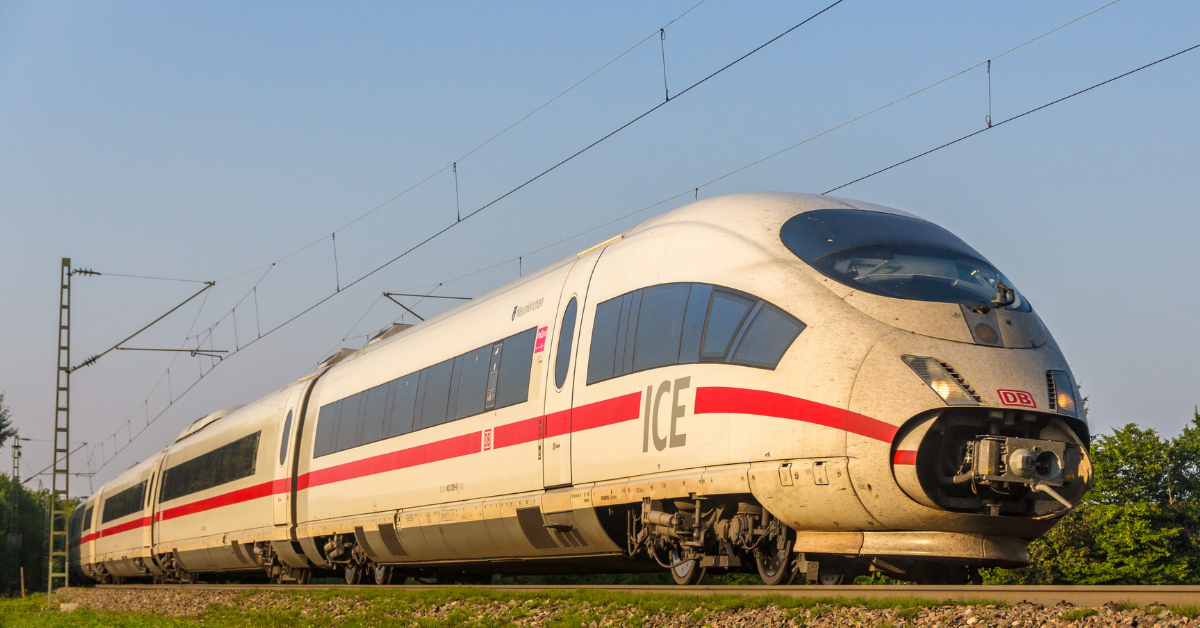

Public transport in Germany is reliable, well-connected, and used by millions every day. For newcomers, it can feel stressful because rules are strict and mistakes can be expensive.
This guide explains how public transport works, how to travel confidently, and how to avoid common beginner mistakes.
What Types of Public Transport Exist in Germany
German cities have different types of transport, but they all use the same ticket system within your city or region.
What you will see:
U-Bahn (Underground Metro) The U-Bahn runs underground in city centers. It’s fast and connects major landmarks and neighborhoods. Think of it like a subway system. Available in larger cities (Berlin, Munich, Frankfurt, Hamburg).
S-Bahn (Suburban Train) The S-Bahn runs above ground or underground. It connects the city center to outer neighborhoods and nearby towns. It’s faster than buses but slower than U-Bahn. Most German cities have S-Bahn networks.
Buses Buses serve local routes and are good for shorter distances. Every city has extensive bus networks. Some buses run all night in larger cities.
Trams (Straßenbahn) Trams are like buses but run on tracks. They’re common in many German cities (Berlin, Munich, Frankfurt). They go both above and below ground in some cities.
Regional Trains Regional trains connect your city to nearby towns and cities outside the main city. They’re slower than express trains but cheaper.
The good news: One ticket works for all these transport types within your city or region. You do not need to understand the difference between each type. You just need to know which ones go to your destination.
Understanding Zones and How They Work
Tickets are based on zones, not distance traveled. Think of zones as concentric circles expanding outward from the city center.
How zones work:
The city center is usually Zone A or Zone 1. From there, zones expand outward (Zone B, Zone C, Zone D, etc.). Your ticket must cover every zone you travel through.
Examples:
If you travel from Zone A to Zone B only, you need an AB ticket. If you travel from Zone A through Zone B to Zone C, you need an ABC ticket.
How to find which zones you need:
- Open Google Maps to know your nearest start location
- Open your city’s transit app
- Enter your start location and destination
- The app shows which transport to use AND which zones you need
- Buy the ticket for those zones
Real example from Berlin:
Zone A covers central Berlin (most tourist attractions, Alexanderplatz, Brandenburg Gate). Zone AB covers city center plus suburbs. Zone ABC covers far outer suburbs.
Buying Your First Ticket (Step-by-Step)
When buying your first ticket, ask the staff (not available at many stations, but at Main stations at info centres), fellow passengers, or check the ticket machine.
Ask them, “Which zones do I need for [your destination]?” This is normal and expected.
You must buy a valid ticket before boarding. Travelling without a valid ticket costs around 60€ in fines (varies in different cities).
Where to buy tickets:
- Ticket machines at stations and stops (most common)
- Mobile apps (easier once you understand the system)
- Service counters (if you want help in person)
- Bus drivers (usually when entered)
Using a ticket machine (step-by-step):
- Look for the small machines at stops and stations.
- Press the “English” button.
- Select your destination. You can either tap it on the map or choose from the list.
- Choose your ticket type (single journey, day pass, weekly pass, etc.).
- Select the zones you need (the machine will guide you).
- Insert payment. Most machines accept coins and cards.
- Take your ticket and keep it with you.
- Validate the ticket immediately.
First-timer tip: On your first day, buy a single ticket to your nearest landmark or attraction. If you get the zones wrong, you will only lose 3€ to 5€. Next time, you will understand the system better. This is normal and part of learning.
Using the app:
- Download your city’s official transport app (BVG for Berlin, MVG for Munich, VBB for Brandenburg, DING for Ulm, etc.).
- Enter your start location and destination.
- The app shows exactly which zones you need.
- Buy the ticket in the app.
- Show the digital ticket on your phone to inspectors when asked.
Apps are easier once you understand the zone system, so start with the ticket machine on day one.
Common Ticket Types
You will see many ticket options, but these are the main ones.
Single Ticket Valid for one journey within your selected zones. Valid for 2 hours or until you reach your destination. Cost: 3€ to 5€ depending on zones.
Day Ticket (Tageskarte) Unlimited travel throughout one day within your selected zones. Costs 8€ to 12€ depending on zones. Good if you plan multiple trips.
Weekly Ticket (Wochenkarte) Valid for one week of unlimited travel. Costs 25€ to 35€ depending on zones. Good for regular commuters.
Monthly Ticket (Monatskarte) Valid for one month of unlimited travel. Costs 40€ to 100€ depending on zones. Most cost-effective for daily commuters.
Deutschlandticket costs 63€ per month. Valid on buses, trams, U-Bahn, S-Bahn, and regional trains everywhere in Germany. This is the newest and most popular ticket for travellers between cities. Not valid on ICE or IC long-distance express trains.
Which ticket should beginners buy?
Start with single tickets (3€ to 5€) for your first week, just to test. Otherwise, buy the one you need if you have figured it out. Once you understand the system and know your regular routes, switch to a day pass or a monthly pass. Calculate: If you take 5 trips per day, a day pass pays for itself.
Local Transport vs. Long-Distance Travel
German transport is divided into two systems.
Local Transport (Your City)
Use this for:
- Getting around within your city
- Short trips to nearby towns
- Daily commute
- Weekend exploration
One ticket covers: Buses, trams, U-Bahn, S-Bahn, and regional trains within zones.
Long-Distance Travel (Between Cities)
Use this for:
- Traveling between cities far apart
- Traveling between states (Bundesländer)
- Day trips to cities 2 hours or more away
Options include: ICE trains (fast, expensive), FlixTrain (budget trains), FlixBus (budget buses).
Different ticket system, book online in advance, not included in local transport passes.
ZOB, FlixBus, and FlixTrain Explained
Not all travel in Germany uses local public transport.
What is ZOB (Central Bus Station)?
ZOB stands for “Zentraler Omnibusbahnhof” which means “central omnibus station” (a fancy word for bus station).
It is a central long-distance bus station used mainly for FlixBus and other intercity buses. Usually located in the city center near the main train station. Think of it like a bus hub for traveling between cities.
FlixBus:
FlixBus is a popular low-cost bus service for traveling between cities.
What you should know:
- Cheaper than trains for long distances
- Buses stop at ZOB in each city
- Tickets are booked online in advance
- Seats are reserved (you choose your seat)
- Luggage rules are clear (first suitcase free, extra bags charged)
- Slower than trains but budget-friendly
- Good for students and budget travelers
FlixTrain:
FlixTrain is a low-cost train service for traveling between cities.
What you should know:
- Cheaper than ICE (fast express trains)
- Limited routes (not everywhere in Germany)
- Tickets must be booked online in advance
- Not included in Deutschlandticket
- Useful if your cities are directly connected
- Faster than FlixBus but sometimes more expensive
When to use what:
- Local transport (buses, trams, S-Bahn): Daily life in your city
- Deutschlandticket (63€): Regular travel to nearby towns
- FlixBus: Budget travel between distant cities
- FlixTrain: Slightly faster than FlixBus if your cities connect
- ICE trains: Fast travel (expensive, but worth it for long distances)
Ticket Validation: When and How
Some tickets need to be validated (stamped) before use. Others validate automatically.
Which tickets need validation:
- Paper single tickets: YES, validate before boarding
- Day passes: YES, validate before boarding or some are pre-validated
- Weekly passes: NO, they are pre-validated
- Monthly passes: NO, they are pre-validated
- Digital tickets (from app): NO, they validate automatically
Where to validate your ticket:
Small yellow, green or red validation boxes (called Entwerter) are located on platforms and inside buses and trams.
How to validate:
- Look for the small rectangular box on the wall (stations, platforms) or inside the vehicle.
- Insert your paper ticket into the slot.
- Push it in until it stamps.
- You will hear a beep or a click when validation is complete.
- Take your ticket out and keep it.
The machine stamps the date and time on your ticket.
Critical mistake to avoid:
New arrivals often forget to validate paper tickets. Ticket inspectors do not care if it was an accident. The fine is 60€. Spend 10 seconds validating. Save yourself the stress and the fine.
How to remember:
If you are holding a physical paper ticket, validate it before boarding. If you have a digital ticket on your phone, it is already valid and does not need validation.
Fines and Common Beginner Mistakes
Germany is strict about ticket rules. Understanding these mistakes helps you avoid them.
Common beginner mistakes:
- Boarding without a ticket (fine: 60€)
- Buying the wrong zones (fine: 60€)
- Forgetting to validate a paper ticket (fine: 60€)
- Assuming inspectors will be understanding (they are not)
- Thinking “it won’t happen to me” (it probably will, at least once)
How ticket inspections work:
Inspectors board randomly. They do not always wear uniforms, so you will not see them coming. They ask to see your ticket. You must show a valid ticket.
If you get caught without a ticket:
You will be fined 60€ on the spot. You can pay immediately or receive a fine notice in the mail. There is no discussion or negotiation.
The harsh reality: The fine system is how Germany keeps public transport working. It funds the system and discourages fare evasion. Germans accept this.
Boarding and Exiting: What You Need to Know
This is simple, but following the flow matters.
Basic rules for boarding:
- Always let people exit first. Do not block the doors.
- Stand to the side, not directly in front of doors.
- Wait until exits are completely clear before entering.
- On buses, press the bell or button to signal the driver you want the next stop.
Basic rules for exiting:
- Prepare to exit one stop before yours (gather bags, stand up).
- Press the stop button or pull the cord before your stop.
- Exit when the vehicle stops. Do not exit before it completely stops.
- Step down carefully, especially on trams and buses (they are high).
- On trains, doors open automatically or with a button. Press the button if needed.
- Move away from the door quickly so others can exit.
Luggage and bags:
- No extra ticket is needed for luggage.
- Avoid blocking doors and aisles with large suitcases.
- Hold or secure your luggage so it does not fall or roll.
- Elevators at stations may not be available everywhere, so be prepared to carry suitcases up stairs.
- Large suitcases and backpacks are normal. Do not worry about looking out of place.
During crowded times:
- Rush hours (7 AM to 9 AM, 5 PM to 7 PM) are very busy.
- Take your backpack off and hold it or place it on the floor.
- Keep your bag close to your body.
- Move toward the back of buses and trams to make room for others.
Helpful German Transport Words
Knowing a few words reduces stress and helps with navigation.
Most important words:
- Bahnhof = train station
- Haltestelle = bus or tram stop
- Gleis = platform (for trains)
- Ausgang = exit
- Eingang = entrance
- Fahrkarte = ticket (older term, still used)
- Ticket = ticket (modern term, English word used in German)
- Einsteigen = to get in the bus or train
- Umsteigen = transfer (changing to another bus, tram, or train)
- Aussteigen – to get out the bus or train
- Entwerter = validation machine (the stamping box)
- Zug = train
- Bus = bus
- Straßenbahn = tram
- Ankunft = arrival
- Abfahrt = departure
Useful phrases:
- “Welche Fahrkarte brauche ich?” = Which ticket do I need?
- “Wo ist der Bahnhof?” = Where is the train station?
- “Zum [destination], bitte” = To [destination], please
- “Sprechen Sie Englisch?” = Do you speak English?
You do not need to speak German fluently to travel. Staff at stations understand “English” and will help.
Apps That Actually Help
Different apps serve different purposes.
Google Maps:
Best for first-time planning. Shows all transport options. Shows real-time delays and platform changes. Easy interface for beginners. Works in English. Highly recommended for your first week.
City-Specific Transport Apps (BVG, MVG, etc.):
More detailed information than Google Maps. Shows exact platform numbers (Gleis) and track numbers. Shows real-time positions of vehicles. Download the app for your specific city. Best once you are familiar with your city.
City app examples:
Deutsche Bahn App (DB Navigator – mainly for trains, but also works for everything):
For regional and long-distance trains. Shows connections between cities. Shows prices and delays. You can book tickets via the website: bahn.de. Useful if you travel to other cities regularly.
Recommendation for beginners:
Start with Google Maps for your first week. It works in English and shows everything. After a few trips, download your city’s official app for more detailed information.
Public Transport Etiquette
Public transport is calm and quiet. Following these simple rules helps everyone.
What is expected:
- Speak softly on phone calls. Avoid loud conversations.
- Move toward the back of buses and trams during rush hour.
- Keep backpacks off your back in crowded areas so you do not hit other people.
- Let others exit before you enter.
- Eating is allowed but keep it clean. Avoid strong-smelling foods.
- Give up priority seats for elderly people, pregnant women, and people with disabilities.
- Do not spread your legs or put feet on seats. One seat per person.
- Do not block aisles or doors with luggage.
Why silence matters in Germany:
Silence does not mean rudeness. Germans prefer calm and quiet public spaces. This is cultural, not personal. Respecting this makes your experience more comfortable.
Traveling with Luggage on Public Transport
Public transport is commonly used for traveling with luggage.
What you should know:
- No extra ticket is needed for luggage, no matter how much you have.
- Avoid blocking doors and aisles. Position luggage along walls or between seats.
- Luggage takes up space. During peak hours, try to avoid traveling with large suitcases.
- Elevators at stations may not be available everywhere. Be prepared to carry suitcases up stairs or use ramps.
- Some larger stations have escalators and elevators in good condition. Others do not.
- Large suitcases are completely normal. Millions of travelers use public transport with luggage daily.
- Do not stress about being in the way. Germans expect luggage during travel times.
Pro tip for heavy luggage:
Plan your travel during off-peak hours (10 AM to 3 PM, after 8 PM). Trains and buses are less crowded. You will have more space and less stress.
Quick Confidence Checklist
Before boarding, check these three things:
- Do I have a valid ticket?
- Does my ticket cover the correct zones I will travel through?
- If it is a paper ticket, is it validated?
If you can say yes to all three, you are good to go.
Final Reassurance: You Have Got This
Almost everyone feels confused on their first public transport trip in Germany. This is completely normal and expected. Confusion is not a sign of failure. It is a sign of learning.
After just 3-4 trips:
- You will understand the zone system
- You will know how to buy tickets confidently
- You will feel comfortable navigating your city
- It becomes second nature
- You will forget how confused you felt on day one
Until then:
- Mistakes are part of learning, not failure
- Germans understand that newcomers are unfamiliar with the system
- Staff at stations and on vehicles will help if you ask politely
- Being 5 minutes late because you misunderstood one thing? Life goes on
- Getting on the wrong bus? It happens. Get off at the next stop, figure it out, and try again
- Forgetting something on a train? Lost and found offices exist and reunite people with items daily
You are not expected to be perfect.
You are expected to try and learn. And you will.